
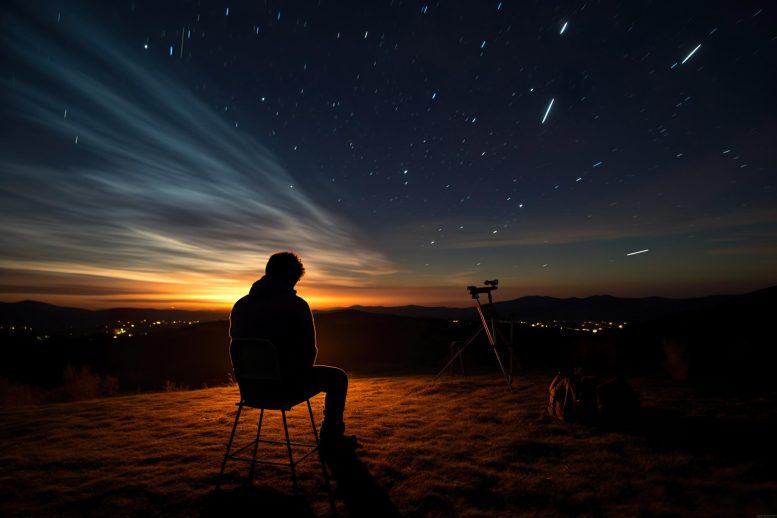
What are some skywatching highlights in July 2023? Mars and Venus start the month close together, but part ways and head lower as July goes on. Mars appears very near Regulus in Leo on the 9th and 10th. Saturn and Jupiter rule the night, along with bright star Fomalhaut. And July is prime time for viewing the Milky Way core from dark sky locations.
Mars and Venus shine after sunset, while Jupiter and Saturn rule the early morning sky. And the Milky Way is a must-see if you can get to dark skies. More July highlights:
- July 3 – Full moon
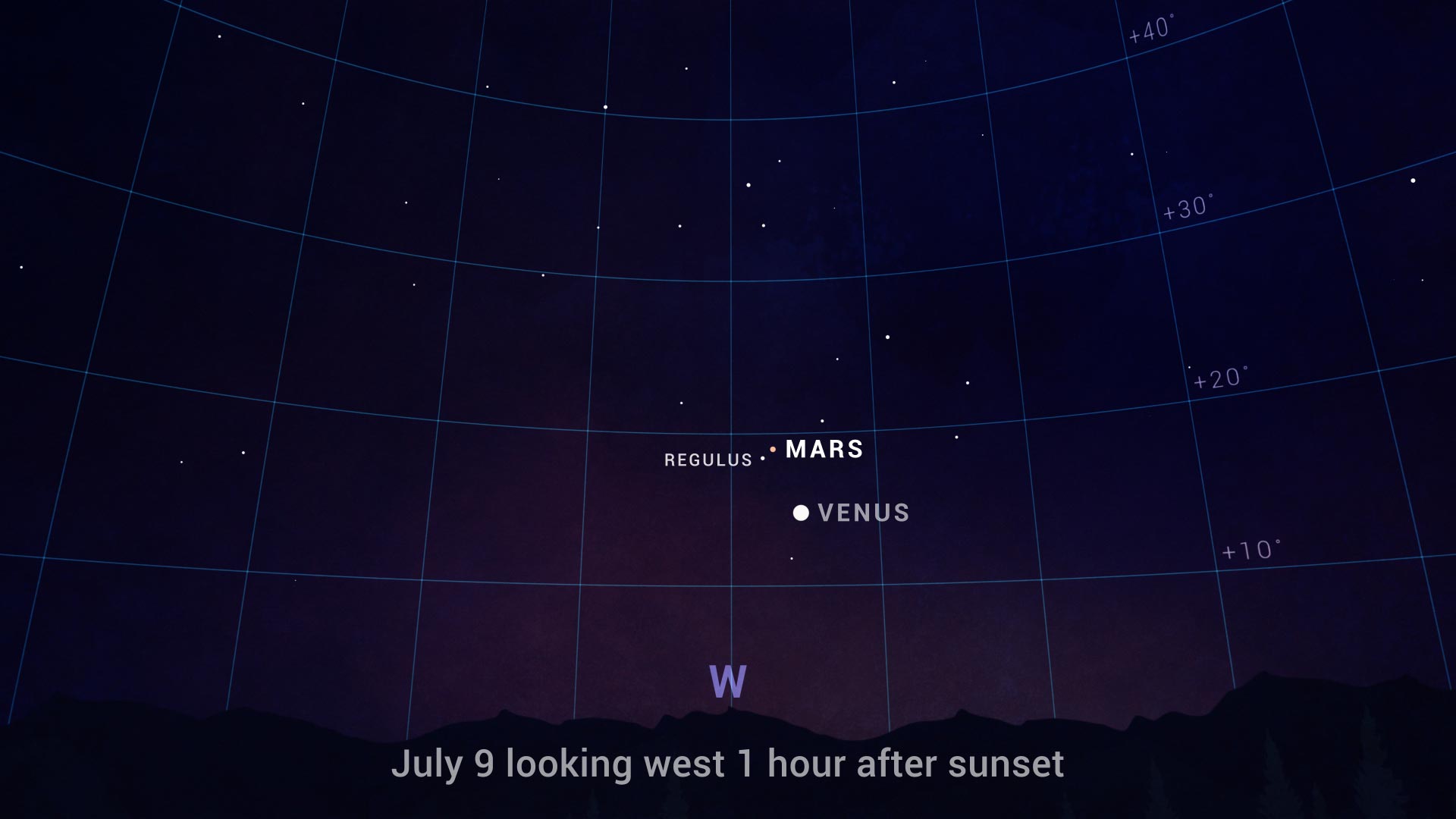
- July 9 & 10 – Red Planet Mars appears very close to bright blue-white star Regulus. The difference in their color should be easy to see with your eyes or a pair of binoculars.
- July 11 – This morning Jupiter shines brightly beneath the crescent Moon in the eastern sky before sunrise.
- July 18 – New Moon. The new moon is a great time for stargazing or viewing the Milky Way, because the sky is extra dark all night with no moonlight to wash out fainter stars and meteors.
- July 20 – The crescent Moon will appear right next to Mars in the western sky following sunset. Venus will be below them, quite low in the sky.
- All month – Venus and Mars are visible in the west after sunset. They appear farther apart and slightly lower in the sky as the month goes on.
- All month – Saturn sits high in the south in the late night and early morning hours, with bright star Fomalhaut visible about halfway between the planet and the horizon.
- All month – The core of our galaxy, the Milky Way, forms a faint, diagonal band of light toward the south as soon as it’s fully dark. You’ll need to be under dark skies away from city lights to see it, as light pollution easily overwhelms its subtle glow.
Video Transcript
What’s Up for July? Mars and Venus go their separate ways, Saturn cruises with a dusty young star, and it’s prime time for the Milky Way.
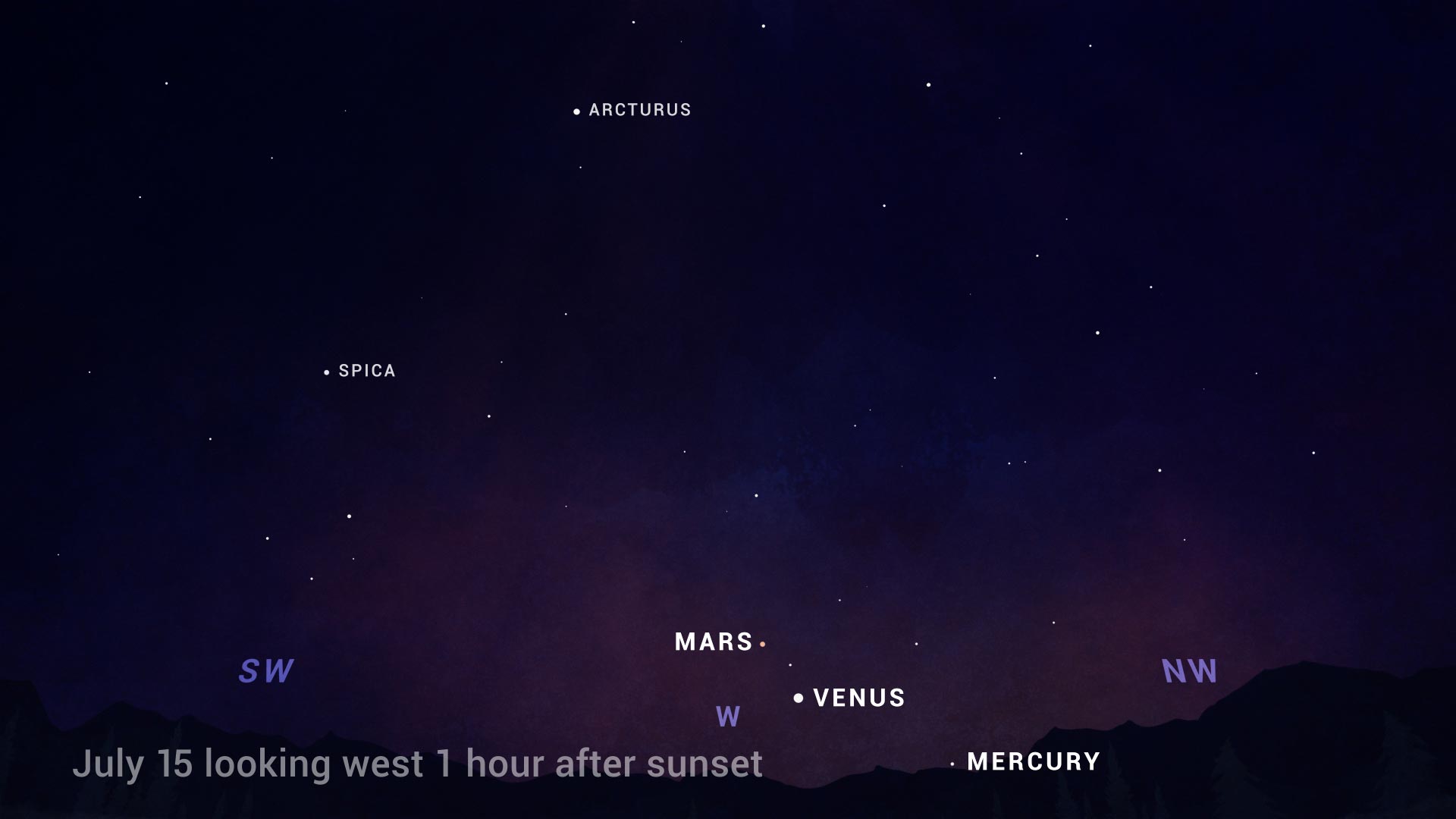
You’ll find Venus and Mars in the west after sunset throughout July. The pair moved ever closer in the sky during June, and they begin July appearing quite near to each other, but it’s time for them to part company. You’ll notice them trending lower as the month goes on, with Venus in particular being noticeably lower each night.
During the second week of July, reddish-colored Mars will appear very close the blue-white star Regulus. Mars is quite distant from Earth right now, and appears at its dimmest for the year in July and August. This month it appears at about the same brightness as Regulus, and you should easily be able to see the difference in their color with your eyes, or a pair of binoculars. They’re closest together on July 9th and 10th.
And on the 20th, the Moon will pass through, appearing just next to Mars. Mercury also pops up – quite low in the sky – in the second half of July, for those with views of the horizon.
During July, you’ll have giant planets Jupiter and Saturn keeping you company in the late night and early morning hours. And notably, you’ll find Jupiter shining brightly beneath the crescent moon on the morning of July 11th. Now, Jupiter appears quite a bit brighter than Saturn, but it’s not just because Jupiter’s a little bigger.
See, the farther away something is in space, the fainter it tends to be, and Saturn’s certainly farther away from Earth than Jupiter. But it’s also farther away from the Sun, and being more distant means it receives much less sunlight than Jupiter to begin with.
So it’s the combination of being both farther from the Sun and farther from Earth that makes Saturn appear so much fainter.
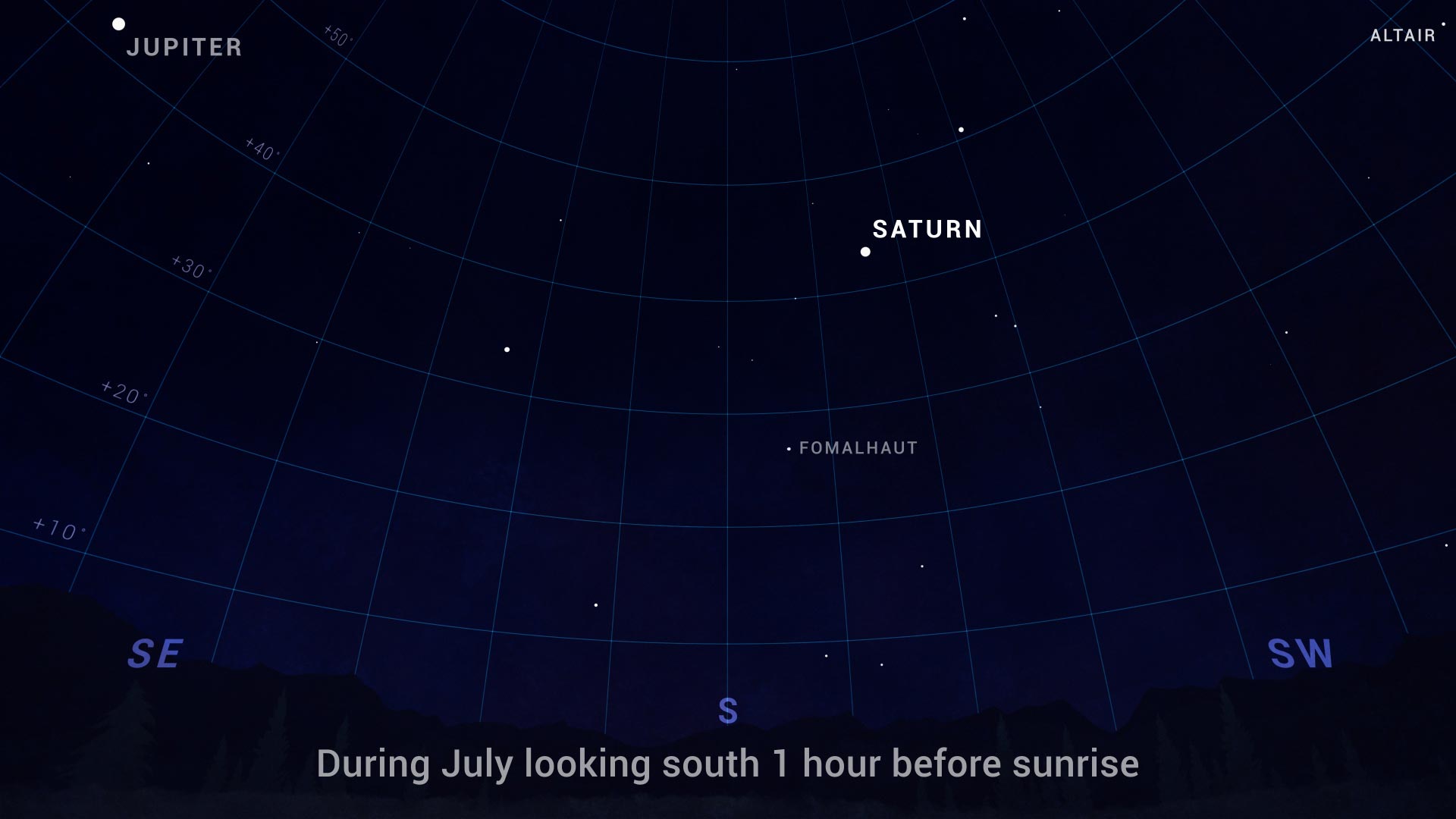
Now, Saturn cruises across the sky with bright star Fomalhaut in July. At around 440 million years old, Fomalhaut is a fairly young star. NASA’s Webb Space Telescope recently revealed new details in the dusty debris disk that surrounds it.
Webb showed that there’s more structure in the disk than was previously known, with three distinct belts made of debris from collisions of larger bodies, probably not unlike the asteroids and comets in our own planetary system. And researchers think the belts most likely are carved by the gravitational forces produced by unseen planets. It’s a nice reminder that most stars you gaze upon represent entire planetary systems. Each one is a sun, and most have a family of worlds in orbit around them.
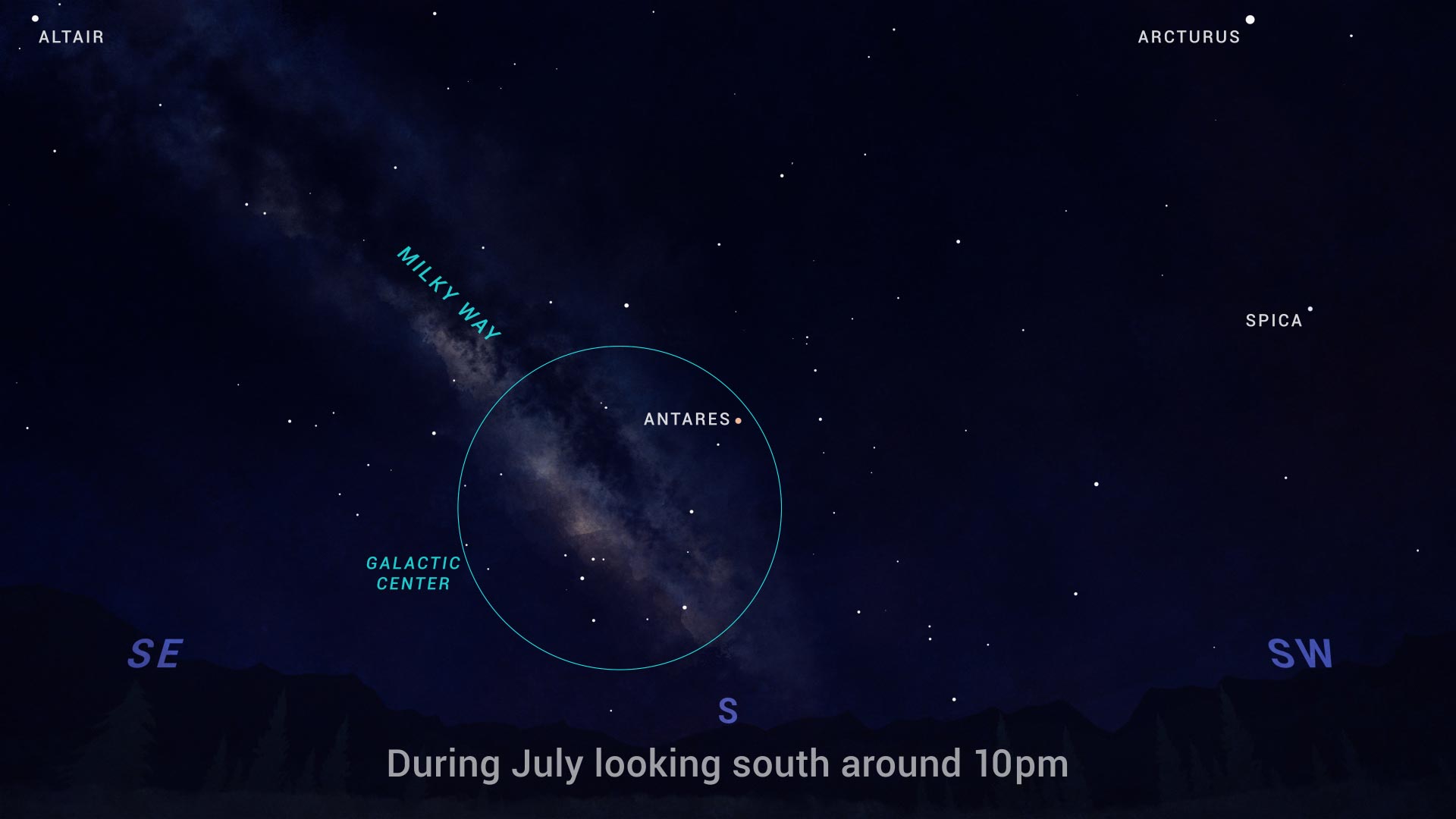
Finally, a reminder that July is prime time for viewing the bright core of our home galaxy, the Milky Way. The Milky Way core is visible looking toward the south in July, as a faint, diagonal band of light, as soon as it’s fully dark. Packed with enormous numbers of stars, along with dark clouds of dust, you can view its faint glow with your own eyes from locations away from bright urban centers.
So if you have the opportunity to go camping or skywatching away from the city, it’s truly one of the most awe inspiring sights of the night sky, and not to be missed!
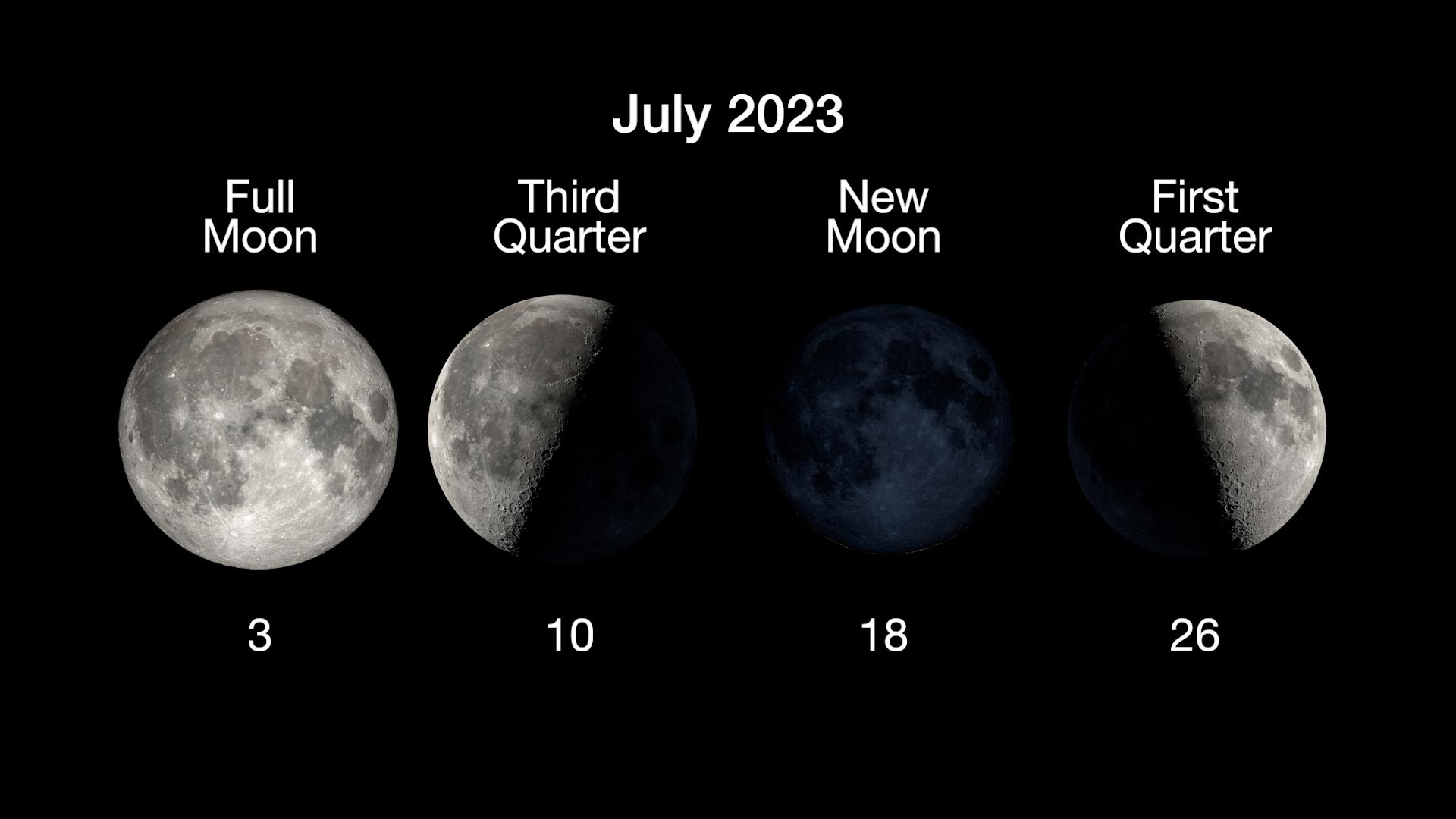
Above are the phases of the Moon for July.
Never miss a breakthrough: Join the SciTechDaily newsletter.
Follow us on Google and Google News.